
8 Revenue Cycle Management (RCM) Mistakes to Avoid

Key Revenue Cycle Management (RCM) Mistakes to Avoid
Most leaks start at the front end: verify demographics and eligibility before every visit, with pre-arrival links doing the data collection.
Keep coders current, file claims daily, and measure visit-to-claim time; texting plays no part in these two stages.
Nearly half of leaders call denials their biggest leak, so work them daily by reason code and send fixes back to the source.
Practices collect 72% of copays at the visit but about 27% of other balances; ask upfront and offer digital payment options.
Replace calls and mailed statements with automated two-way texting that links to your own portal, and keep every reminder to the minimum necessary under HIPAA.
Collecting Patient Data Nobody Verifies
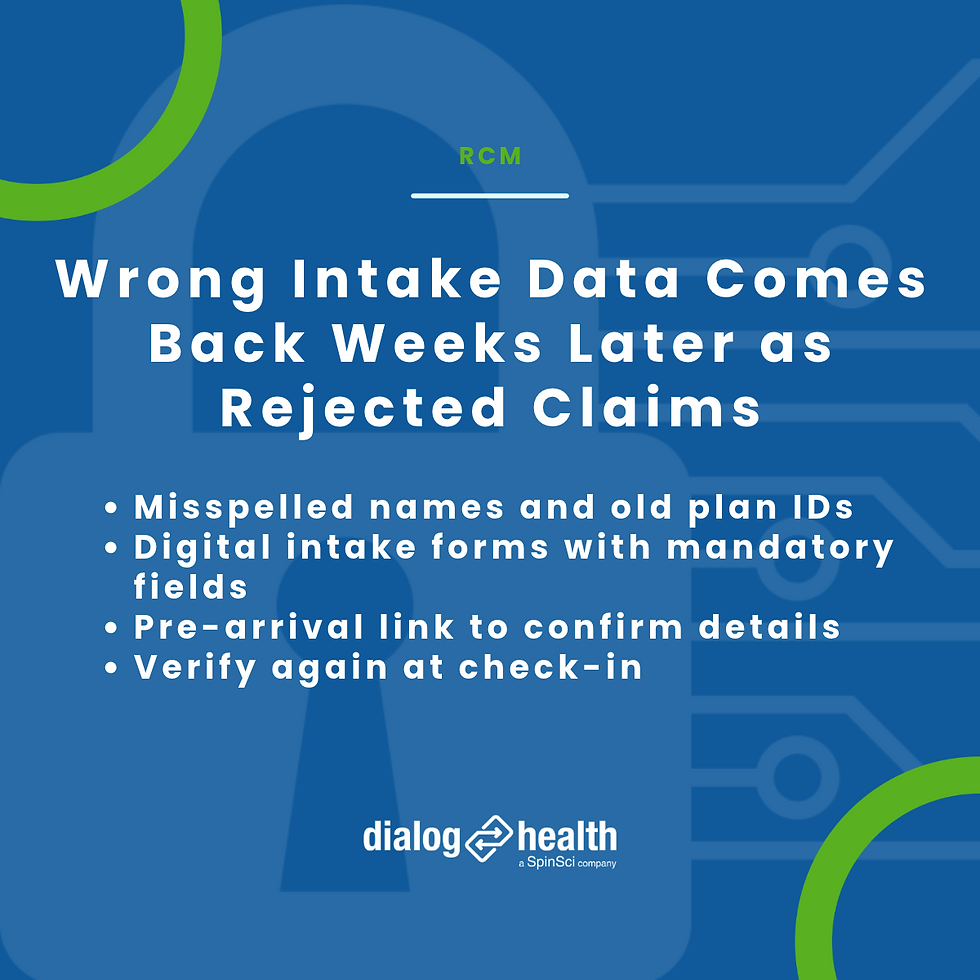
The first mistake happens at the front desk, long before a claim exists.
A misspelled name, an old address, a plan ID copied from last year's card or the wrong subscriber on the account all look harmless on the day of the visit.
Nothing flags them until a claim is rejected or a statement lands at the wrong address weeks later, and by then the balance is aging.
Fix the intake, not the claim.
Use digital intake forms with mandatory fields and real-time validation so a record cannot be saved incomplete.
Better still, send a pre-arrival registration link so patients confirm or correct their own details before they walk in, then verify again at check-in, returning patients included.

Skipping the Eligibility Check Before the Visit
Coverage changes more often than patients remember to tell you.
Plans terminate, employers switch carriers, and a service you assumed was covered turns out to need authorization.
When nobody confirms active coverage before the visit, those surprises arrive as denials after the fact.
In a January 2026 poll, 23% of medical group leaders named the front end their biggest revenue cycle leak, and most of it traced to eligibility and coverage accuracy problems.
Run automated eligibility verification before every visit, not only for new patients.
Treat it as financial clearance, with coverage, estimated patient responsibility and authorization status settled before the date of service.
An insurance verification link sent ahead of the appointment lets patients upload a current card, so the check runs on fresh data.
Coding That Stops Short of Full Specificity
Coding mistakes cut both ways.
Code below what the documentation supports and you leave reimbursement on the table.
Code above it and you invite an audit.
Outdated code sets cause the same trouble, since payers reject codes retired in the last annual update.
The root cause is often the documentation rather than the coder, because nobody can code what the clinician never wrote down.
Keep coders current with ongoing training on each year's changes, run claims through compliance software that flags specificity gaps before submission, and audit a sample of coded claims every quarter.
This is one stage where patient communication plays no part at all.
Holding Claims Instead of Filing Them Daily

Batching claims feels efficient.
Someone submits once a week, charges pile up in between, and every claim in the batch inherits the delay.
Each held day adds to your days in A/R, and a claim that sits too long can miss the payer's filing deadline entirely, which turns earned revenue into a write-off.
Set a daily submission policy and measure the time from visit to submitted claim.
Ask clinicians to close encounters within 72 hours and billing staff to post charges within two days, then watch the gap shrink.
Texting has no role here either; this one is pure back-office discipline.
Writing Off Denials Without Asking Why
A denial treated as a one-off gets appealed, re-sent or written off, and the same error comes back next week on a different patient.
Nearly half of medical group leaders, 48%, call denials and appeals their biggest revenue cycle leak, and most describe those denials as preventable.
Each denied claim also restarts the collection clock while your team reworks it.
Build a dedicated denial workflow instead:
Work denials daily, high-dollar claims and nearest appeal deadlines first
Categorize every denial by reason code and the stage where the error started
Review your five most common denial codes for preventable causes each month
Send the findings back to registration, scheduling or coding to fix the source
Track the numbers behind it too: without a scorecard of denial rate by reason, days in A/R and net collection rate, the same mistake repeats unnoticed.
Waiting Until After the Visit to Collect
Letting a patient leave without paying moves their balance into the hardest bucket you have.
The gap is stark: practices collected 72% of copays at the time of service in 2024 but only about 27% of other patient balances.
Once the patient is home, you are competing with every other bill in the mailbox.
Train front-desk staff to ask for the copay and any known patient responsibility before the visit ends, with a script that reads as a conversation rather than a demand.
Share a cost estimate ahead of time so the amount is never a surprise.
Then make paying easy with clear digital options: a payment link, a portal, a card on file for agreed plans.
Those options only work if the patient actually receives and opens them, which is where the next mistake comes in.
Why Are You Still Chasing Balances by Phone and Mail?

Most revenue cycle teams still run patient financial communication on the two channels patients ignore most.
Calls go to voicemail, robocalls get blocked, and mailed statements cost money per piece and tell you nothing about whether anyone read them.
Automated two-way texting fixes the reach problem and the labor problem at once.
A reminder goes out on a set cadence, say every 30 days until the balance clears, with a link to your own payment portal.
The two-way part is what separates it from a blast: patients reply with a billing question or a request for a payment plan, and your staff answer in the same thread instead of fielding an inbound call.
The same channel carries the pre-arrival registration, insurance and co-pay links from the earlier mistakes, so one workflow covers both ends of the cycle.
Delivery receipts, clicks, replies and opt-outs show who was reached, so you adjust timing and wording instead of guessing.
One caution: some patients ignore texts they suspect are scams, so use a recognizable branded short link and the same sender identity every time.
Treating Payment Reminders as Exempt From HIPAA
It is tempting to treat a balance reminder as just billing and send it from a personal cell phone, an unsecured email or a consumer messaging app.
Any message that ties a named patient to care they received is protected health information, and that includes the bill.
Apply the minimum necessary rule to every reminder.
Amount due, due date and a secure payment link are enough; diagnosis, procedure or visit details never belong in the message.
Automated texts also need documented opt-in, opt-out language in the first message and an automatic stop when a patient asks, which puts the TCPA on the same checklist as HIPAA.
Choose platforms with independently validated compliance, such as HIPAA and SOC 2 attestations and an audit trail of every message, and sign a business associate agreement with each one.
This is a revenue cycle mistake, not only a legal one.
A complaint or breach costs far more than the balance you were chasing, and patients who trust the channel pay faster.

Stop Chasing Balances by Phone. Text Them Instead.
The last two mistakes come down to reaching patients on a channel they read without putting PHI at risk.
Dialog Health is the HIPAA-compliant two-way texting platform built for that, with automated balance reminders, secure links to your payment portal and billing replies in one thread.
Documented results:
98% SMS open rate
200%+ higher response rate than phone calls
21% year-over-year drop in one client's patient A/R
Fill out this quick form and one of our healthcare communication experts will reach out to schedule a brief 15-minute video call at your convenience.
We've done this hundreds of times with healthcare organizations like yours, and you'll get all the information you need.
P.S. No hard sell. We'll show you where texting fits your revenue cycle and where it doesn't.


