
8 Benefits of Automation in Patient Scheduling You Can Measure

Updated: Jan 14
Key Benefits of Automation in Patient Scheduling
Manual scheduling drains staff time, limits patient access, and costs hospitals up to $150,000 annually in inefficiencies and missed visits
Automation can reduce scheduling time by 79-82% and improve staff productivity by 30-40%
Automated reminders cut no-shows by up to 35%, directly boosting revenue and filling more appointment slots
Real-time synchronization and EHR integration eliminate double-bookings and improve data accuracy by up to 45%
68% of patients prefer providers offering digital self-scheduling, and 85% of healthcare providers plan to increase their investment in automation
What Makes Manual Scheduling So Challenging?

When scheduling is handled manually, problems stack up fast.
Staff spend significant time coordinating appointments, often through lengthy phone calls that eat into their day.
The process slows down further when teams need to verify insurance eligibility or pull data from medical records before confirming a booking.
Patients feel the friction too.
They can only schedule during office hours, which creates headaches for anyone who works a typical 9-to-5.
And when they do call, they might wait on hold, leave a voicemail, or deal with miscommunication that leads to mix-ups.
Here's the bigger issue: most patients don't answer phone calls anymore.
Staff end up making multiple attempts and leaving voicemails with no way to know if they were even heard.
All of this repetitive work contributes to staff burnout and lower morale over time.
Staff Get Their Time Back
Automation changes the math entirely.
A University of Michigan study found that automated scheduling cut schedule creation time from 22-28 hours down to 4-6 hours per month - a reduction of 79-82%.
That's time staff can redirect toward patient care instead of administrative tasks.
The broader data backs this up.
AI-based scheduling tools have been shown to improve staff productivity by 30-40%.
One of our case studies saw similar results.
A hospital's Metabolic and Nutrition Services department saved over 524 staff hours after switching to automated referral texts, eliminating the need for repetitive calling and manual scheduling.
Patients Can Book on Their Own Terms
Automated systems let patients schedule appointments whenever it's convenient for them - not just when your office is open.
Through mobile apps, websites, or chatbots, they can book at midnight or during a lunch break without picking up the phone.
This flexibility matters.
68% of patients say they're more likely to return to providers who offer digital self-scheduling and instant confirmations.
No more waiting on hold, no more phone tag.
Fewer No-Shows, Fuller Schedules

Missed appointments hurt revenue and waste valuable time slots.
Automation helps on both fronts.
One of our case studies with a physician group showed a 34% reduction in no-shows after implementing automated appointment reminders.
The result was over $100,000 in additional revenue.
Industry-wide, healthcare organizations using automation report up to 35% fewer missed appointments.
The most effective reminders include appointment details, preparation instructions, and a simple way for patients to confirm or reschedule via SMS, email, or phone.
Say Goodbye to Double-Bookings and Errors
Manual scheduling leaves room for human error - double-bookings, conflicting appointments, outdated patient information.
Automated systems eliminate these issues through real-time synchronization across your scheduling platforms.
When your scheduling software integrates with your EHR or EMR, data accuracy improves significantly.
Studies show that integrated systems can boost compliance reporting accuracy by up to 45%.
The University of Michigan research confirmed this as well: automated schedules are highly accurate and require little to no correction after the fact.
This integration also ensures that appointment details align with each patient's history and provider availability, reducing the back-and-forth that slows everything down.
Lower Operational Costs Without Cutting Corners
Inefficient scheduling is expensive.
According to Becker's Hospital Review, hospitals lose up to $150,000 annually due to scheduling problems and missed visits.
Automation chips away at these costs in a few ways.
You spend less on manual outreach - fewer reminder letters to mail, fewer repeated phone calls to make.
And when your system handles high call volumes without extra staff, you avoid the expense of hiring additional administrative support during peak periods.
Smarter Resource Management Across the Board
When scheduling runs more smoothly, everything else follows.
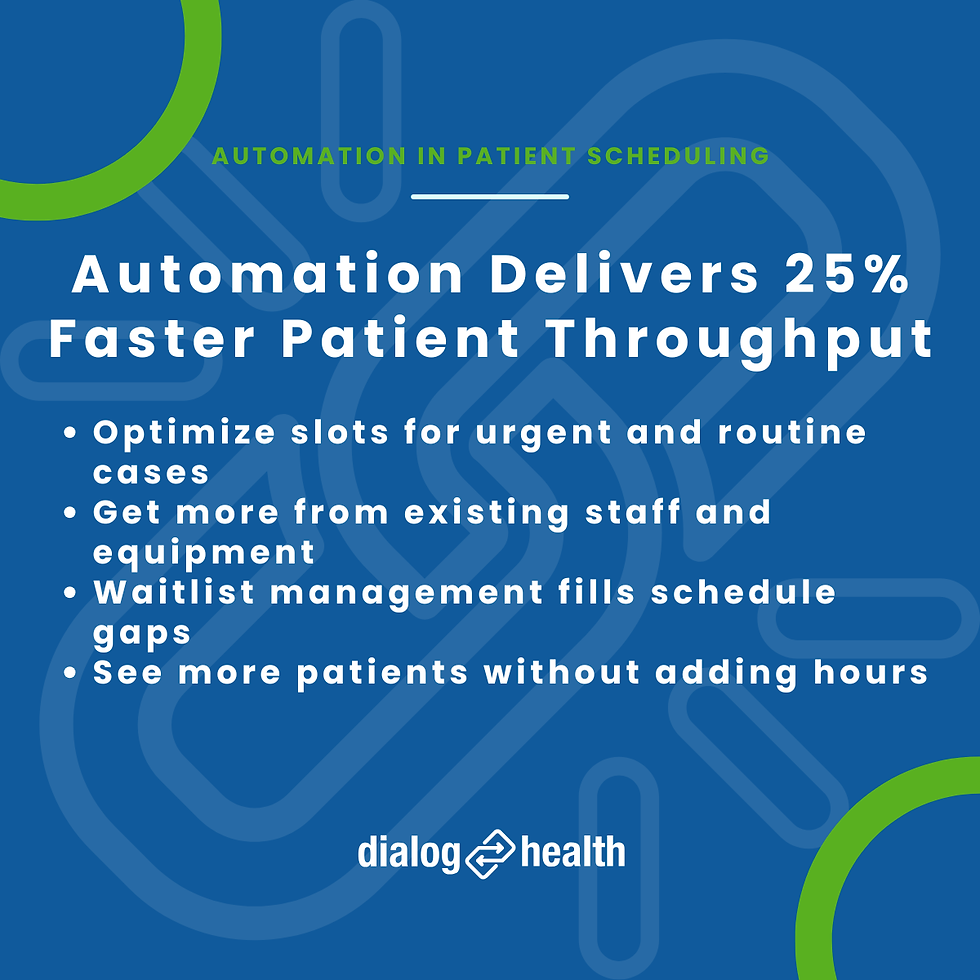
Automated systems help you get more out of your existing staff, equipment, and appointment slots.
Features like slot optimization, waitlist management, and rule-based scheduling make this possible.
For example, you can reserve certain time slots for urgent cases while filling gaps with routine appointments.
The payoff is measurable.
Healthcare organizations using automation report 25% faster patient throughput, meaning you can see more patients without adding hours to the day.
Data That Actually Helps You Improve
Automated scheduling systems don't just book appointments - they collect data you can actually use.
You'll get reports on appointment trends, patient demographics, peak booking times, frequent cancellations, and which services are in highest demand.
Some systems go further with predictive capabilities.
They can estimate appointment durations and flag patients who are likely to miss their visits, giving your team a chance to reach out proactively.
Real-time analytics dashboards let you track delivery rates and spot patterns as they emerge, so you can make adjustments without waiting for monthly reports.
Making the Shift to Automated Scheduling
If you're considering automation, a few best practices will set you up for success.
Start with online scheduling that shows real-time availability, pair it with automated reminders, and make sure your system integrates with your EHR and billing platforms.
Offering multiple ways to book - website, mobile app, chatbot, and phone - ensures you meet patients where they are.
Some still prefer calling, while others want a fully digital experience.
The industry is moving in this direction.
According to Gartner, 85% of healthcare providers plan to increase or maintain their investment in hyperautomation in the coming years.
The technology behind it breaks down into two parts.
AI handles predictive functions like forecasting patient demand.
RPA (Robotic Process Automation) executes the routine tasks - verifying insurance, updating records, sending reminders - without human input.
Your Staff Deserves Better Than Phone Tag
You've seen what automation can do - fewer no-shows, less staff burnout, and real cost savings.
Dialog Health's two-way texting platform helps healthcare organizations put these benefits into practice.
Our HIPAA-compliant solution handles appointment reminders, confirmations, and rescheduling through the channel patients actually respond to.
The results speak for themselves:
34% reduction in no-shows with over $100,000 in additional revenue
524+ staff hours saved on scheduling and outreach
97% reach rate for patient communications
Curious how it works for organizations like yours?
Fill out this quick form and one of our healthcare communication experts will reach out to schedule a brief 15-minute call.
No pressure, no long presentations - just answers to your questions.


